I’ve been paying attention to politics since before I could tie my shoes. My earliest memories of kindergarten include not finger paints or nap mats, but heated “debates” with teachers—me parroting the political lines I’d overheard at home. At five years old, I didn’t have the framework or nuance, but the spark was there. The pulse of politics has been in me as long as I can remember.
Over the decades, one pattern has become impossible to ignore: the systematic push by Democrats to sideline and caricature true leftists. Rather than drawing strength from progressive policies or channeling the collective power of workers, the party has repeatedly chosen comfort. Comfort in their donor networks. Comfort in the structures of capitalism. Comfort in defining themselves only by contrast to Republicans, never by a willingness to reimagine the system itself.
It is a bitter irony: Democrats present themselves as the defenders of progress, but the moment leftists demand more than small reforms, they’re branded unrealistic, dangerous, or—my favorite insult of all time—dirty hippies who don’t understand the real world. The strategy is as old as it is effective: delegitimize the voices that challenge the foundations, while cozying up to the very moneyed powers that profit from those foundations.
Of course, one could argue that this isn’t always a deliberate strategy. Sometimes it’s electoral pragmatism. Sometimes it’s genuine ideological difference. Sometimes it’s the inertia of a political system that punishes boldness. I can acknowledge that complexity. But what matters most isn’t the motive—it’s the effect. The consistent result has been a narrowing of political possibility, a suffocation of imagination, and the routine marginalization of the very voices that could shift the ground beneath our collective feet.
History proves that progress rarely emerges from moderation alone. The labor movement, civil rights, LGBTQ+ rights—all of these required radical, uncompromising pressure. And yes, coalition-building and compromise eventually made the policies possible. But without the so-called “unrealistic” dreamers and agitators, the horizon never would have shifted in the first place. To mock or demonize those forces is to forget how change has ever actually happened.
Consider the Democratic National Committee’s treatment of Bernie Sanders in 2016 and 2020. Instead of welcoming his policies—policies that energized millions of young voters—they closed ranks to ensure he never threatened the party’s comfort with capitalism. Or think of Alexandria Ocasio-Cortez, instantly branded “dangerous” for proposing policies like a Green New Deal, which most climate scientists agree are not radical enough. And of course, the “defund the police” movement, reduced by Democrats themselves to a caricature, rather than engaged as a serious critique of systemic injustice.
The video that sparked these reflections featured yet another moderate Democrat attacking leftists for daring to hold both parties accountable. As if truth should be partisan. As if standing against the twin engines of Republican cruelty and Democratic complacency is betrayal rather than integrity. It’s easier, after all, to caricature the left than to wrestle with the intellectual arguments of socialism, communism, or post-capitalist futures. It’s easier to sneer than to imagine a society not held hostage by markets.
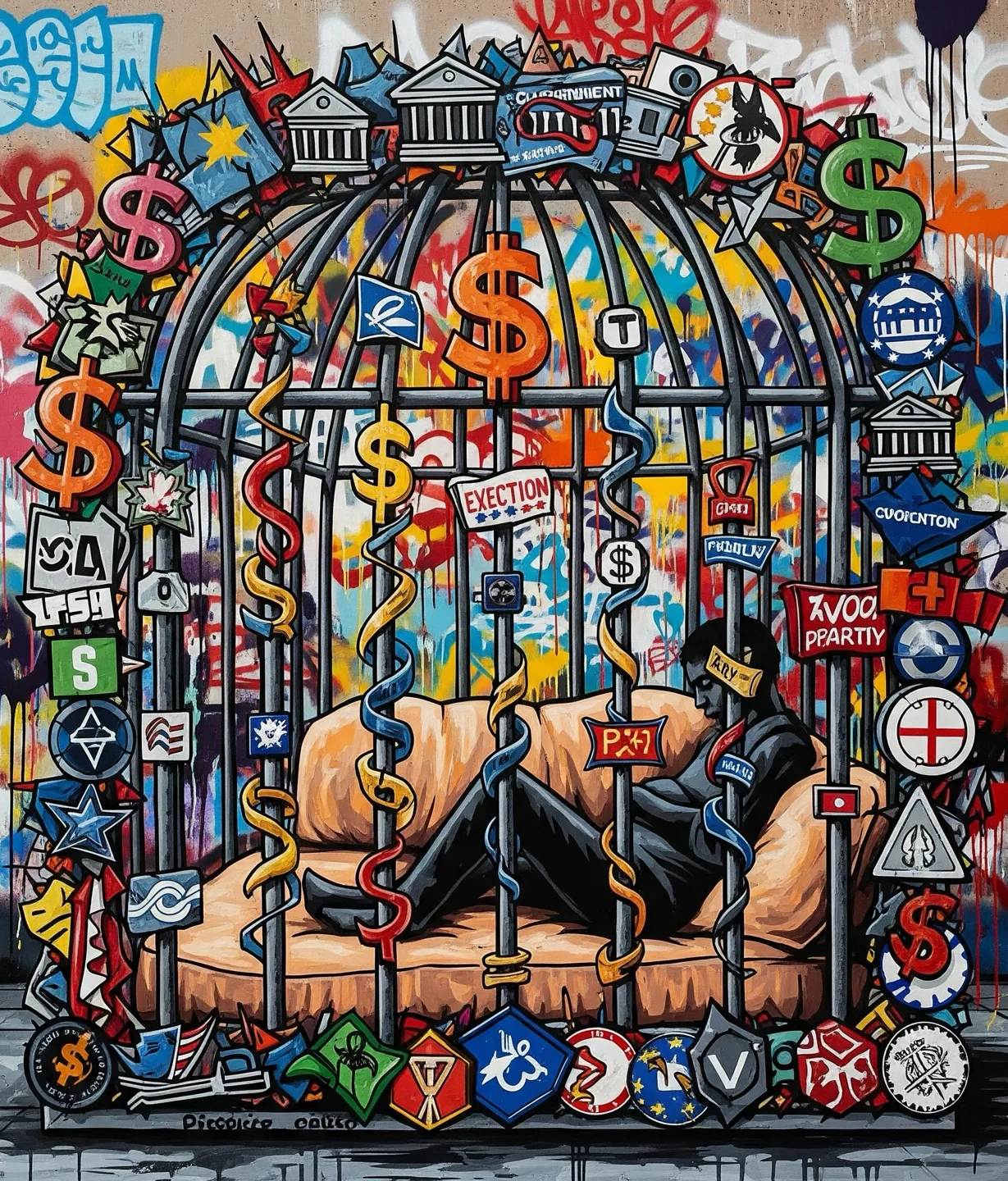
And so the cycle repeats: moderation as the cage, capitalism as the air we’re told we cannot breathe without.
But here’s what gives me both grief and strength: the very fact that we continue to be demonized proves the persistence of our pressure. If we were irrelevant, they wouldn’t bother. If we were powerless, they wouldn’t need to caricature us. Our existence alone unsettles the story of inevitability that the political center tries to tell.
I’ve lived long enough to see my “dirty hippie” friends proven right more often than wrong. I’ve seen moderate compromises fail to stem climate collapse, inequality, and endless war. I’ve seen the rhetoric of “realism” used as a weapon against the imagination of something better.
So when I’m told to fall in line, to choose the lesser of two evils, to stay quiet about capitalism itself—I think back to that five-year-old, arguing politics before he could even spell the word. Naïve? Maybe. But at least he knew one thing instinctively: silence in the face of power is never neutral.