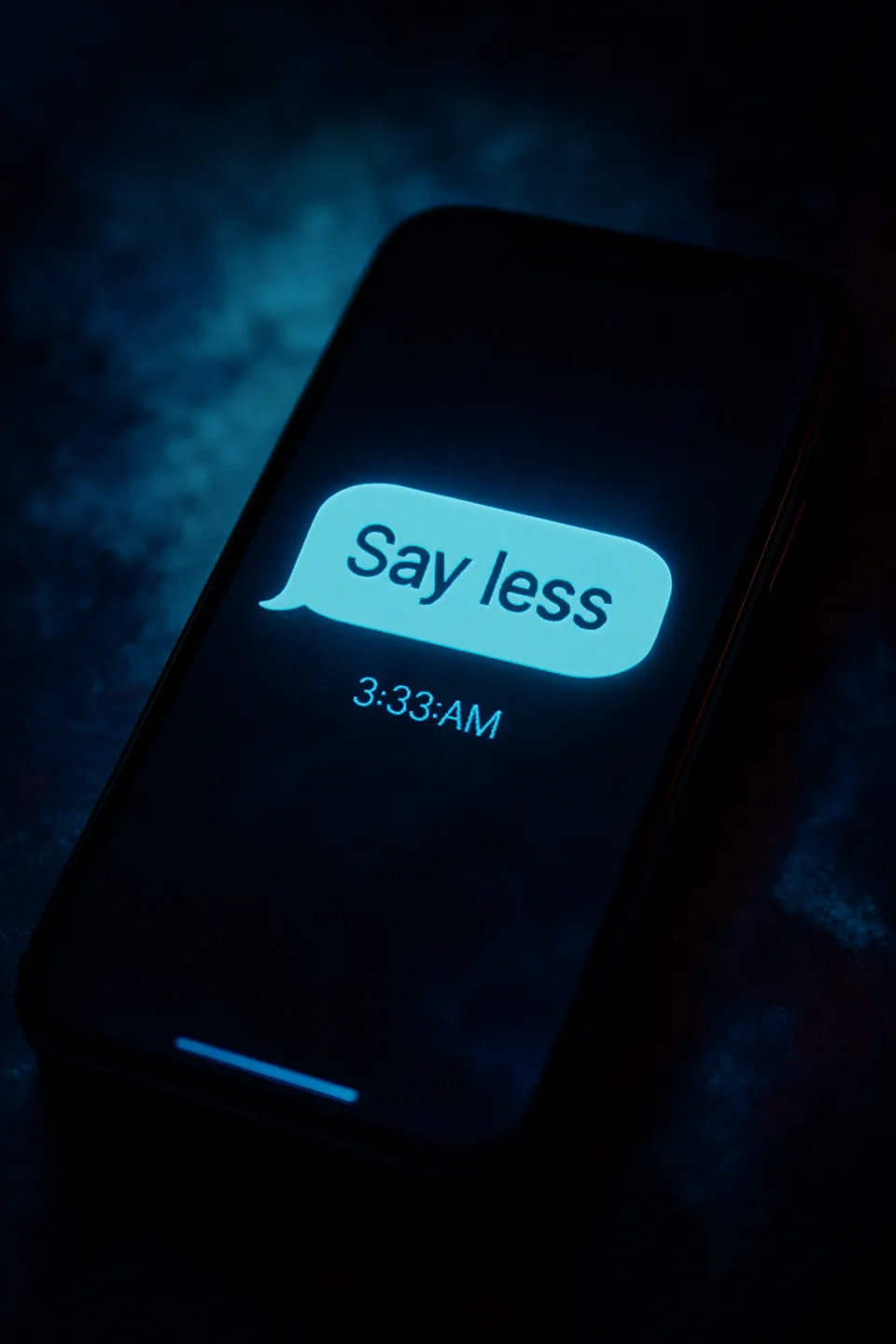
There’s a strange kind of genius in the way teenagers speak—especially online—where every sentence is both a joke and a test, every phrase dripping with irony, edge, and a deep unconscious instinct for symbolic warfare. It’s not that they know what they’re doing linguistically—it’s that they don’t, and yet they do. They inherit the language like an unstable relic, then immediately dismantle it and throw the pieces at each other to see what still cuts. They’re not just using slang; they’re performing a ritual of cultural recursion where meaning is forged, destroyed, and reborn faster than any adult can track.
And the adults? Oh, we’re the ones trying to explain the magic trick after the show, not realizing the trick was never about illusion—it was about disarming the stage. Take “zesty,” for instance. What began as a neutral adjective is now a looping punchline—a half-mocking, half-loving term for flamboyance, gayness, fabulousness, or any performance of queerness that lands with just enough exaggeration to be socially digestible. A “zest fest” isn’t just dinner—it’s a queer-coded communion in disguise. But make no mistake: the kids aren’t doing this to be mean. They’re doing it to see what sticks, and who flinches. It’s the fastest way to find out who’s playing and who’s policing.
And this is what makes it beautiful. Because in the eyes of the linguistic pendulum—where every era tries to correct the overcorrection of the one before—this generation is swinging hard in the opposite direction of cancel culture, virtue signaling, and semantic rigidity. They are not interested in safe language; they’re interested in live language. Dangerous, agile, unstable language that pulses with context and collapses under inspection. It’s brilliant. It’s terrifying. It’s exactly what postmodern philosophy tried to do with 700 pages of footnotes and no punchlines. These kids are doing it in a 7-second video with a distorted voice filter and 14 layers of irony. And honestly? They’re doing it better.
They know the words are broken, and they’re not trying to fix them. They’re trying to stretch them, twist them, play them against each other until the original charge is either neutralized or reabsorbed into a different social battery. Sometimes the effect is liberatory. Sometimes it’s awful. But always, it’s telling. This is a kind of forcing at a cultural scale—language as a recursive system of identity testing, boundary-setting, and symbolic mutation. And it loops. Hard. Because just when we start to believe that progress is linear—that we’re moving forward with increasingly enlightened speech—here comes the younger generation saying “retard” and “gay” again, but with a wink that dares you to ask if they mean it. Spoiler: they do and they don’t. That’s the whole point. And if you try to pin it down, you’re already out of sync.
Meaning, for them, is a vibe. A gesture. A shapeshifting meme that functions as both mask and mirror, both attack and embrace. This isn’t regression. It’s recursive absurdism. A language game where the rules are rewritten with every use, and the only crime is sincerity. The pendulum doesn’t swing backward because we’ve failed—it swings because it must. Because the center shifts only through oscillation. And these kids? They are its most agile players. They are the glitch and the update. The insult and the alibi. They are, without knowing it and precisely because of that, the best postmodern philosophers we have.
And this is why we should pay attention—not to police, not to co-opt, but to listen. Slang is not just noise or nonsense. It’s not just “kids these days.” It’s a live feed of worldview—compressed, encrypted, and broadcast in joke format. Understanding that “Six Seven” is today’s “TP for my Bunghole” is funny, sure, but stopping there misses the signal. Because when you start to decode what they laugh at, what they reclaim, and what they ridicule, you’re staring directly into the soft machinery of their values, fears, and allegiances. And if you’re a parent, a teacher, a creator, or anyone hoping to speak across the generational gap, this kind of linguistic literacy matters. Not because you need to start saying “zesty” at dinner, but because the meaning behind it tells you where their attention lives.
Language is their social nervous system, their symbolic terrain. If you can read it—even if you never speak it fluently—you gain access to how they construct identity, humor, power, and belonging. And from that place of understanding, you can actually shape the conversation. Not control it. Not sanitize it. But shape it—by reflecting back with awareness, curiosity, and maybe even some earned respect. Because when you know the code, even if you never say it out loud, the kids can feel it. You’re not just another adult clutching pearls or pretending to be cool. You’re someone who sees the pendulum and chooses to dance with it.
That doesn’t just make you a better translator. It makes you a better mirror.