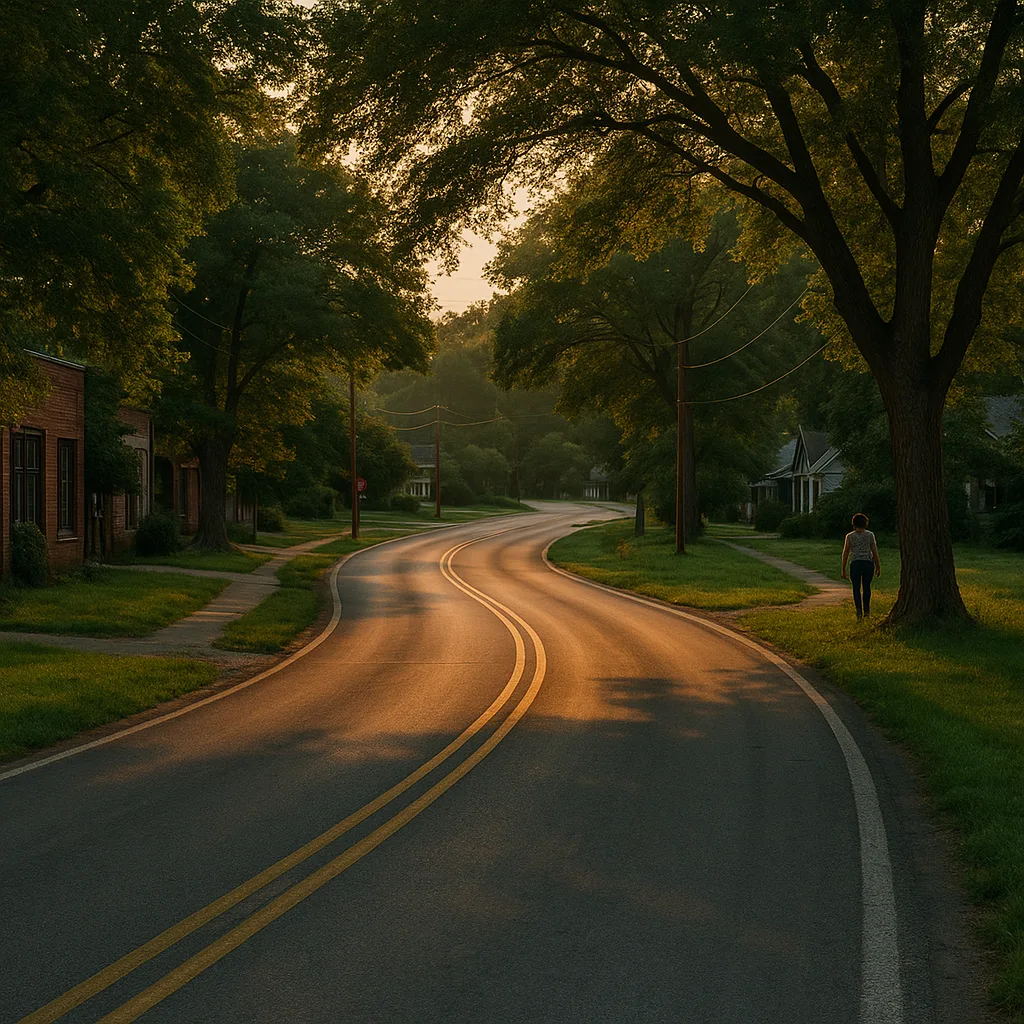
Most of the time, I don’t take the highway. I take the backroads. The meandering routes through neighborhoods and stoplights, the ones that weave me past old storefronts and strangers waving from porches. I like the speed of these roads—not frantic, not frozen, just human. I like how often I see people, how often I see the city I live in.
And yet, almost every time, I still put the address into Maps. Not because I want the fastest route, but because I want the ETA. I want to know what the straight line costs, so I can see how much longer my meander will take. The surprising thing? Hardly any longer at all. A twenty-minute highway trip becomes twenty-three on the backroads. Thirty minutes on the interstate becomes forty with the meander. It’s rarely more than fifteen to twenty-five percent longer—and in exchange, I don’t have to fight the hordes racing to and from their urgent, invisible things to do.
That’s the math of meandering. But there’s also the philosophy.
Because here’s the truth: whether you drive the highway or the backroads, you still end up where you’re going. The path is determined. But how you move along it—that’s where freedom lives. Meandering is not about escape. It’s about presence. It’s the choice to notice. To wave. To stop at the red light and watch the woman in the crosswalk twirl her grocery bag like a lasso. To accept the path as it unfolds and to let its bends be part of the story.
And beneath that presence is trust. The trust that even if the route wanders, you’ll still arrive. The trust that a zigzag is not a mistake, but a way of seeing the road from another angle. The meander asks for patience, yes—but it also offers faith: that the winding path will carry you just as surely as the straight one.
This goes beyond driving. Belief meanders too. I’ve zigzagged from the certainties of Christianity to the curiosities of occultism, through determinism, and now into Zen Absurdism. Each bend wasn’t a waste of time but a widening—each detour adding a view I would’ve missed if I’d stayed on the straight road. Joy meanders in the same way: it doesn’t arrive on a schedule. It appears in detours, in accidents, in the little pockets where efficiency would have passed without looking.
Maybe this is what Mirror Theory whispers: the path is fixed, but the reflections shift. Maybe this is what Forcing Theory points to: expansion doesn’t require straight lines. It requires willingness to keep moving, even when the path doubles back.
So yes, the highway is faster. But meandering is richer. The few minutes I “lose” dissolve into the hours I’ve actually lived.
Because that’s the quiet truth: highways save you minutes; meanders give you hours.