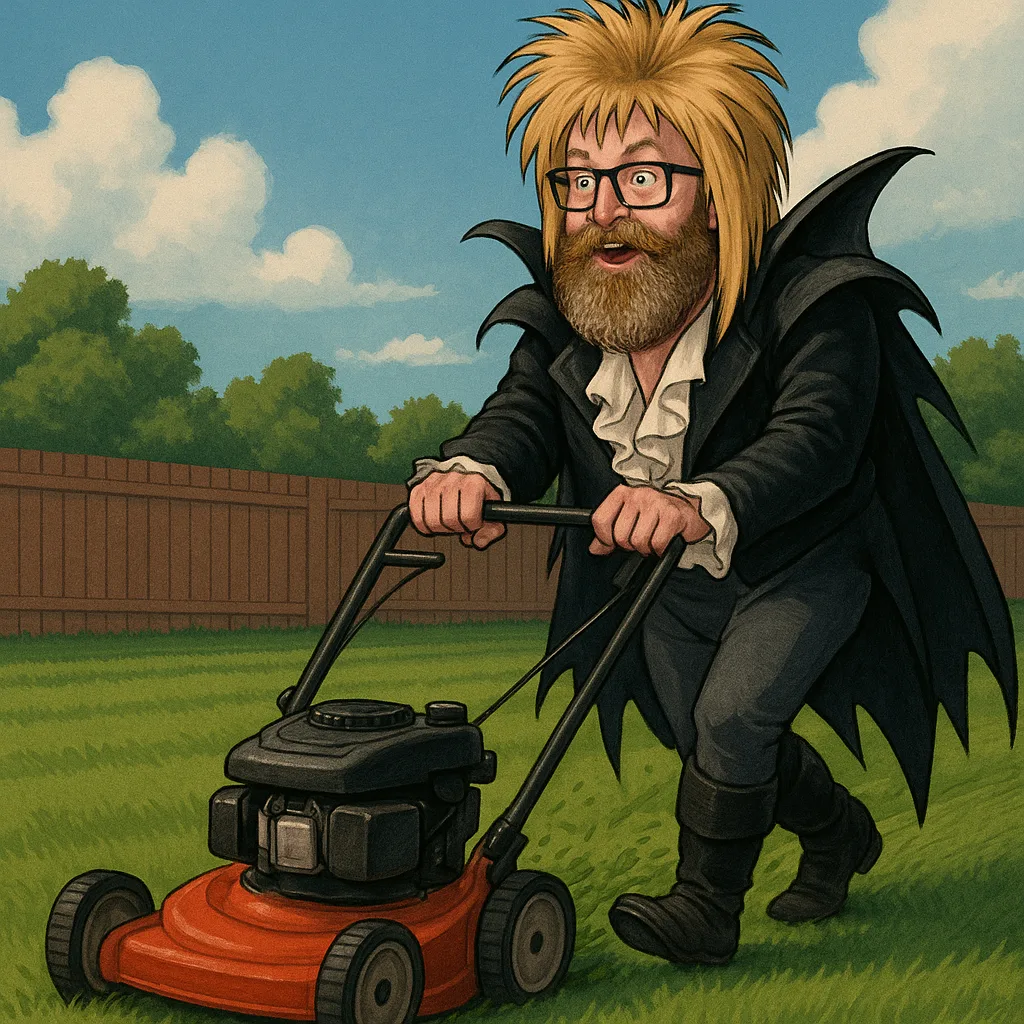
There was a time when I walked labyrinths like other people go to church. Naropa University, where I worked for a while, had one tucked away on campus. I’d wander into it like a pilgrim, tracing the winding path to its center and back out again. Something about the mindless pacing, the way each turn led inevitably to another, carried me to a kind of stillness I couldn’t summon on my own. No decisions to make, no committee of voices debating in my skull, just the quiet gift of a path already laid. Eventually life shifted, as it tends to. Naropa was in the rearview mirror, replaced by our vintage gift shop, and then later by Oklahoma itself. My labyrinth walking slowed. The only labyrinths I found myself in were of the cinematic variety, watching David Bowie strut as the Goblin King with my daughter Jett, singing along and laughing at the absurdity of it all. I figured my labyrinth days were over. And then, one morning this summer, I realized I’ve been walking one all along—just not in stone. In grass. Behind a mower.
It happened by accident. My headphones weren’t charged, which meant no podcast, no music, no noise to drown out the noise. I decided to mow anyway. When I pulled the cord and the engine roared to life, it swallowed the chatter in my head in one gulp. The committee was adjourned. All that was left was the pacing: long lines, slow turns, retracing the path the mower had already carved. Each decision already made, each step only following. I found myself focusing on the breath, the crunch of each footfall, the weight of the handle in my hands. And there it was again—the stillness I once felt walking carefully designed labyrinths. Except this time it wasn’t a contemplative garden at a Buddhist university. It was my front yard in Oklahoma, at seven in the morning, on one of the busiest streets in the city. Cars flying past, neighbors sipping coffee, me out there tracing lines like a monk with a push mower. Absurd? Absolutely. And perfect.
That’s the thing: we imagine contemplative practice requires special equipment—a cushion, a mantra, incense, a guru. We mythologize stillness as something found only in sacred spaces. But absurdism has taught me that meaning isn’t waiting in some hidden chamber; it’s found in the ordinary, even the ridiculous. The Goblin King may never have mowed the lawn, but the truth is, labyrinths don’t need goblins. Sometimes they’re just grass and gasoline. Sometimes the hum of a mower drowns out the hum of the mind. Sometimes the path to presence is already right under your feet, spiraling back and forth across your own yard, reminding you that every path, however mundane, can lead to the center.