There are moments when space exploration makes itself impossible to ignore. A rocket rises. The sky burns. The cameras gather. Millions of us look up at the same time and remember, briefly, that we are not only consumers, voters, workers, parents, patients, doomscrollers, and exhausted citizens of the daily circus. We are also the animal that looked at the Moon and decided to go there.
That is the beauty of something like Artemis. It gives us spectacle. It gives us fire. It gives us the ancient human gasp. We need those moments. We need the species-level reminder that awe is still available, that up is still a direction, that even here, in the muck and noise of Earth, we can still point ourselves toward something larger than survival.
But I keep thinking about Voyager.
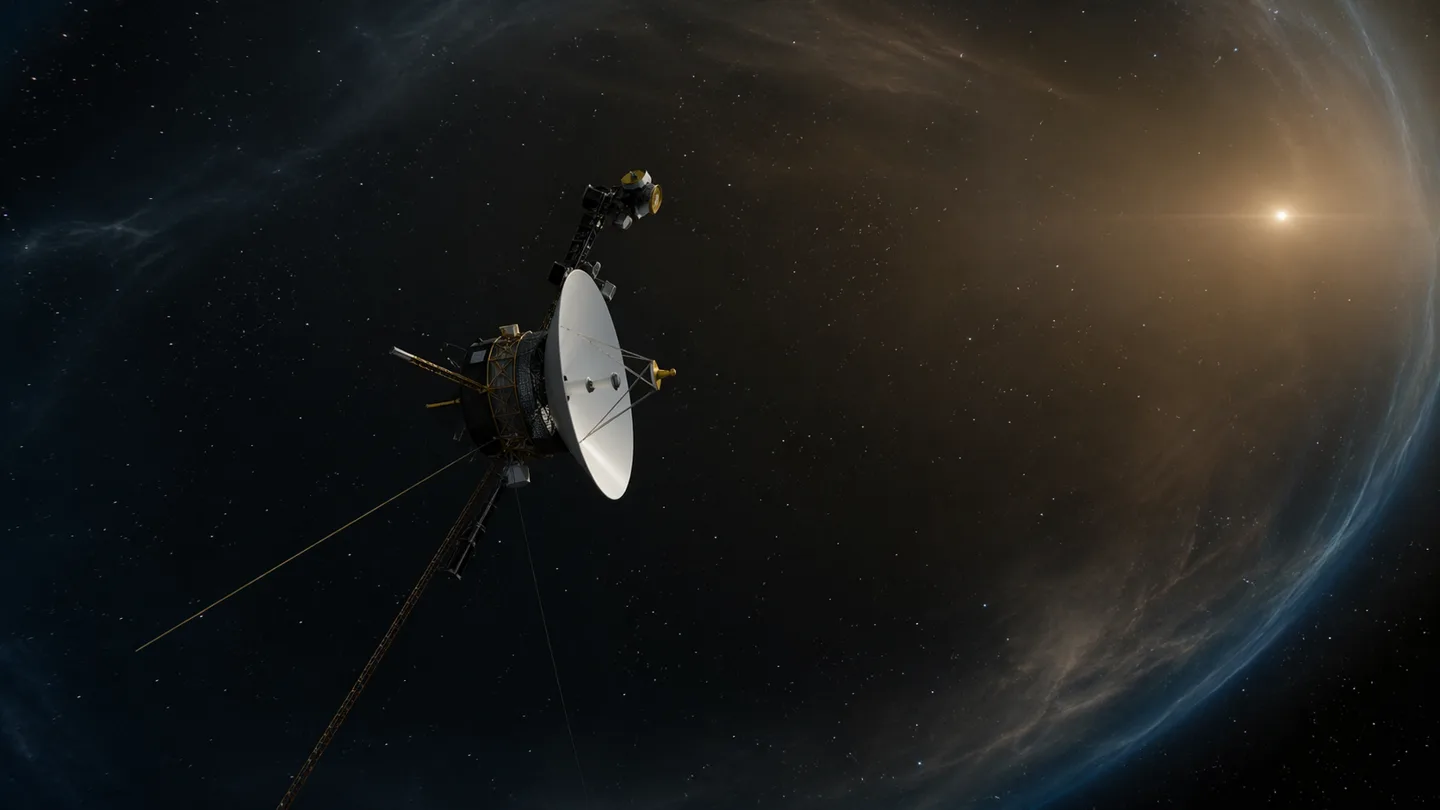
Voyager 1 and Voyager 2 do not have the same cinematic hold on our attention. They are not new. They are not loud. They are not rising on pillars of flame while the world watches. They are old machines now, launched before many of us were born, moving farther and farther from home with the strange dignity of mechanical monks. And somehow, that may be even more beautiful.
Because Voyager reminds us that sometimes the most astonishing human achievement is not the launch. It is the keeping-going. The patch. The reboot. The ancient instrument still humming. The exhausted team still finding one more watt, one more angle, one more improbable workaround. The spectacle gets the eyes, but the maintenance moves us past the planets.
There is a lesson in that which feels bigger than space. Most of life is not launch day. Most of life is not the cinematic ascent. Most of life is showing up again after the applause has faded. It is tending the fragile thing. It is adjusting the course. It is realizing the battery is lower than it used to be and still asking, “What can we do with what remains?”
That is the kind of progress we do not always know how to celebrate. We love beginnings because beginnings are clean. They have countdowns. They have music. They have hope before reality has had a chance to complicate it. But long-term progress is messier and holier. It is fifty years of fixes. It is teams inheriting work from people they may never meet. It is one generation launching a question and another generation still listening for the answer.
Voyager began as science, but over time it became a kind of prayer. A small human-made thing, carrying our curiosity into the dark, refusing to stop speaking simply because the room got bigger. Artemis reminds us we can still rise in fire. Voyager reminds us that the deeper miracle is endurance.
Not the roar, but the whisper. Not the launch, but the signal. The tiny voice past the planets saying we are still here, still listening, still going.