Note:
I really want to write about something other than what’s happening in the news, but it’s been difficult to let my mind wander these past few days. I hope this piece will be the last of its kind for a while. Then again, I am far from in charge of the brain and whatever she decides to fixate on next.
I’ve spent most of my adult life running hot—rage not as an occasional flare-up, but as a steady fuel. Those who know me well have seen it in action: reprimanding someone mid-meal for mistreating restaurant staff, confronting cruelty toward unhoused folks in public with no hesitation. It wasn’t about performance. It was about principle. Rage was my compass, my mode of ethical navigation. It flared in the presence of injustice—and there’s never been a shortage.
But lately, something has overtaken it.
The anger’s still there, still ready to ignite. But the dominant note now? Disappointment.
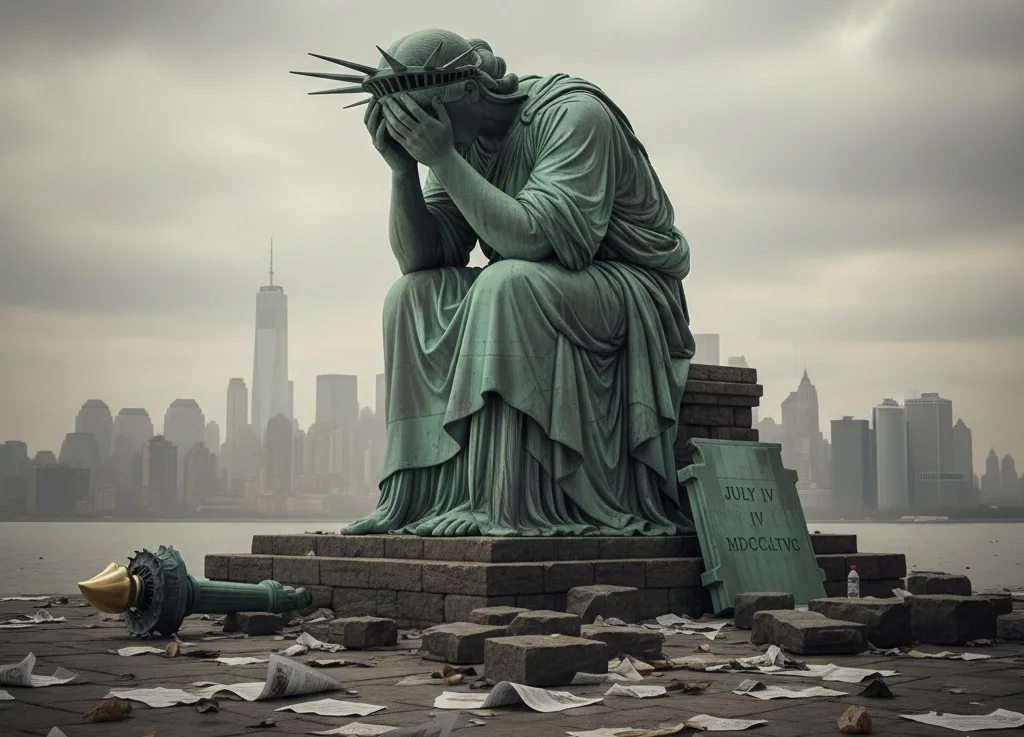
Not the sharp, righteous kind—the kind that smolders. The kind that sticks in your throat because it’s not aimed at just one person or institution. It’s aimed at all of us.
I’m disappointed in people. In our institutions. In what we’ve allowed, tolerated, normalized. And I don’t mean that as a distant observer. I mean we—me included.
We are all guilty for what is happening today.
This is America.
Land of the rich and their servants.
It’s not hyperbole. It’s just the quiet truth of where we live. A culture where service is expected, but dignity is optional. Where cruelty is baked into the system, and moral theater substitutes for change. A place where dreams are marketed but not delivered. Where most of us are functionally indentured, working to sustain a system that gives less than it takes—and still demands gratitude.
And here’s the most bitter truth: I no longer feel shocked.
Just... tired.
This isn’t a call to despair. If anything, it’s a confession of clarity.
Rage was useful—it kept me engaged. It pulled me toward action. But disappointment has a different texture. It’s quieter. Heavier. Less flashy. It doesn’t scream. It sits. It watches. It notices how deep the rot really goes.
And in that stillness, a new question emerges:
Now what?
What does resistance look like when the fire cools?
How do you move forward when you’re no longer surprised?
What happens when the outrage is no longer theatrical—but simply embedded in the fabric of your being?
This is where I find myself now. Not burned out, exactly. But burned clean. The illusions are gone. The ideals have been singed away. What’s left isn’t hope—not in the traditional sense. It’s something closer to responsible absurdism.
A willingness to witness. To stay awake.
To keep showing up—not with naive optimism, but with clarity.
To do good not because it changes the world, but because it refuses to make it worse.
Maybe this is a kind of maturation.
Or maybe it’s just grief with better posture.
I don’t need to be inspired right now. I need to be lucid.
I don’t need to believe in redemption arcs. I need to name what’s rotting, hold it in my hands, and ask what can still grow from it.