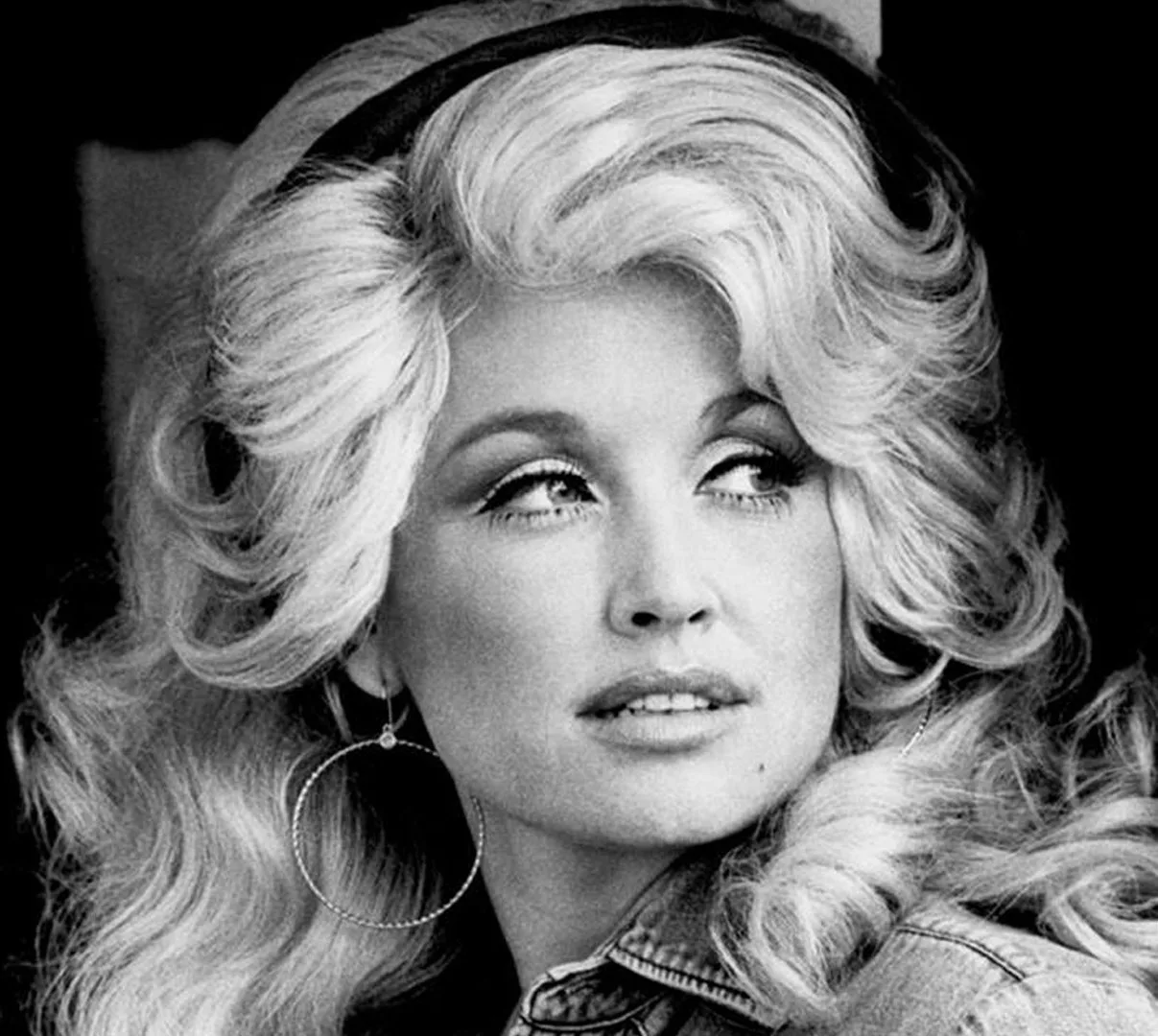
Yesterday afternoon, I was sitting on the couch with my daughter, Jettie, when I glanced at my phone and saw a comment online saying that Dolly Parton had died. I don’t remember exactly what I was doing before I read it. Nothing important, apparently, because whatever was happening disappeared immediately. I started crying. Not misty-eyed, not the quiet little moment of sadness you have when you hear that someone famous has passed away. I mean I immediately started crying enough that Jettie noticed and asked me what was wrong. “Dolly Parton died,” I told her. She looked at me for a second and then asked the perfectly reasonable question a child would ask when her father suddenly starts crying over someone dying: “Did you know Dolly?” I laughed a little through the tears. “No, baby. I didn’t.” That answer seemed to perplex her. It perplexed me a little too.
I didn’t know Dolly Parton. I never met her. I never had some special personal encounter with her that would explain the strange intimacy of the grief I suddenly felt sitting there on the couch. But I grew up with Dolly. If you were born in the 1970s, especially anywhere near the South, Dolly Parton wasn’t simply a musician. She was part of the atmosphere. She was on television. She was in movies. Her songs were everywhere. There was the enormous hair, the rhinestones, the laugh, the voice, and the self-deprecating jokes that always seemed to reveal she was three steps ahead of whoever thought they were laughing at her. She was simply Dolly. And as I sat there trying to understand why I was crying, I realized that the music and movies weren’t really what I was grieving. I was grieving the loss of a particular kind of human being.
Dolly Parton was born into poverty in the mountains of Tennessee and somehow transformed herself into one of the most recognizable people on Earth. She became a brilliant songwriter, entertainer, actor, businesswoman, and cultural institution. She also became extraordinarily wealthy, and she could have done what extraordinarily wealthy people often do. She could have spent the second half of her life trying to turn a ridiculous amount of money into an even more ridiculous amount of money. She could have built monuments to herself. She could have bought a social media company. She could have tried to send her ego to the moon. Instead, Dolly gave kids books. Her father couldn’t read or write, and she saw what that limitation had cost him, so she started the Imagination Library and began sending books to children. What started close to home eventually spread far beyond it and put hundreds of millions of books into the hands of kids. There is something almost absurdly beautiful about that. You claw your way from poverty into unimaginable wealth and fame, look around at everything the world has handed you, and decide: kids should have books.
That alone would make her remarkable to me, but there was something else about Dolly that mattered deeply to the kid I once was. I grew up in fundamentalist Christianity, a world with very clear boundaries. There were people who were right and people who were wrong. Saved and lost. Righteous and sinful. There were rules about what people were supposed to believe, who they were supposed to love, how women were supposed to behave, and what happened to people who wandered too far outside those lines. And then there was Dolly Parton. Dolly was unmistakably Southern. Openly Christian. Feminine to the point of glorious exaggeration. She didn’t reject where she came from or treat the people there with contempt, but she also refused to let those identities become excuses for cruelty.
I remember seeing her in interviews talking about gay people, about acceptance, about loving people instead of judging them. I remember hearing a version of Christianity coming from Dolly that felt remarkably different from some of the Christianity surrounding me. She seemed to be saying something incredibly simple: love everybody. Not because they have earned it. Not once they believe the right things. Not after they become more like you. Just love them. Over the years she spoke about racial injustice, women’s equality, and the dignity of LGBTQ people with the same basic insistence that seemed to guide so much of her life: people ought to be allowed to become whoever the hell they are.
I don’t want to rewrite my own history and pretend Dolly Parton single-handedly pulled me from fundamentalism or transformed my understanding of the world. Life doesn’t work that neatly. But people become mirrors before we have language for what they’re showing us. Sometimes another human being simply demonstrates that a different way of being is possible. For a kid surrounded by certainty, Dolly introduced a little ambiguity. You could come from the same world and arrive somewhere different. You could believe in God without believing you were God. You could be successful without making accumulation the purpose of success. You could be powerful without needing everyone else to become smaller. You could be unapologetically yourself and somehow make that selfhood more spacious for everyone around you. Those little cracks matter. Light gets through them.
Maybe that’s why I cried. Dolly Parton had been somewhere in the background of my consciousness for essentially my entire life. She was one of those cultural landmarks you don’t realize you’re using to orient yourself until suddenly someone tells you the landmark is gone. But sitting there with Jettie, another realization started forming: I felt good about crying. Not good that Dolly was dead, obviously. Good that I had become a man who could sit beside his daughter, hear that someone he admired had died, and immediately cry without apologizing for it. I didn’t wipe my eyes quickly and tell her I was fine. I didn’t make a joke to escape the vulnerability. I didn’t suddenly become very interested in whatever was on television. I cried, and when she asked why, I told her.
There are versions of me from earlier in this life who might not have been able to do that. There are certainly versions of masculinity I was exposed to growing up that would have found something embarrassing about it. Men were supposed to control emotion, conceal tenderness, remain composed. Crying was permitted under very specific circumstances, preferably involving funerals, national tragedies, or perhaps football. Certainly not because Dolly Parton died. But I’m glad Jettie saw me cry. I’m glad her understanding of what a man can be includes her father sitting beside her with tears running down his face because a woman he never met left the world.
Because maybe what she witnessed wasn’t simply grief. Maybe she witnessed gratitude. I was crying because Dolly’s life mattered to me. Because kindness matters to me. Because generosity matters to me. Because becoming wealthy and deciding children need books seems infinitely more admirable than becoming wealthy and deciding the world needs a larger monument to your ego. Because standing beside people who are being excluded matters. Because using whatever power you acquire to enlarge the lives of other people matters. Because spending a lifetime becoming more completely yourself while somehow making more room for everyone else feels like a life exceedingly well lived. And because somewhere along the way, people like Dolly helped me become someone capable of recognizing those things.
That’s the strange thing about human beings: we shape people we will never meet. Dolly never knew me. She never knew that some little fundamentalist boy in Oklahoma was watching her on television and quietly absorbing the possibility that loving everyone might actually mean everyone. She didn’t know that decades later that boy would become a father. She didn’t know he would eventually sit on a couch beside his daughter, learn that she had died, and cry. She didn’t know that some portion of those tears would be gratitude for helping him become a softer, more open, more loving man.
Maybe legacy isn’t primarily the things with our names attached to them. Maybe it’s the invisible permission we give other people to become. Permission to be strange. Permission to be generous. Permission to change. Permission to love people we’re told not to love. Permission to remain tender in a world constantly encouraging us to harden. Dolly Parton gave a lot of us that permission.
So, no, Jettie. I didn’t know Dolly. But Dolly helped me know myself a little better. And yesterday, without having any idea she was doing it, she helped me show my daughter something about the kind of man I have become.
That’s worth crying about.
Rest well, Dolly.