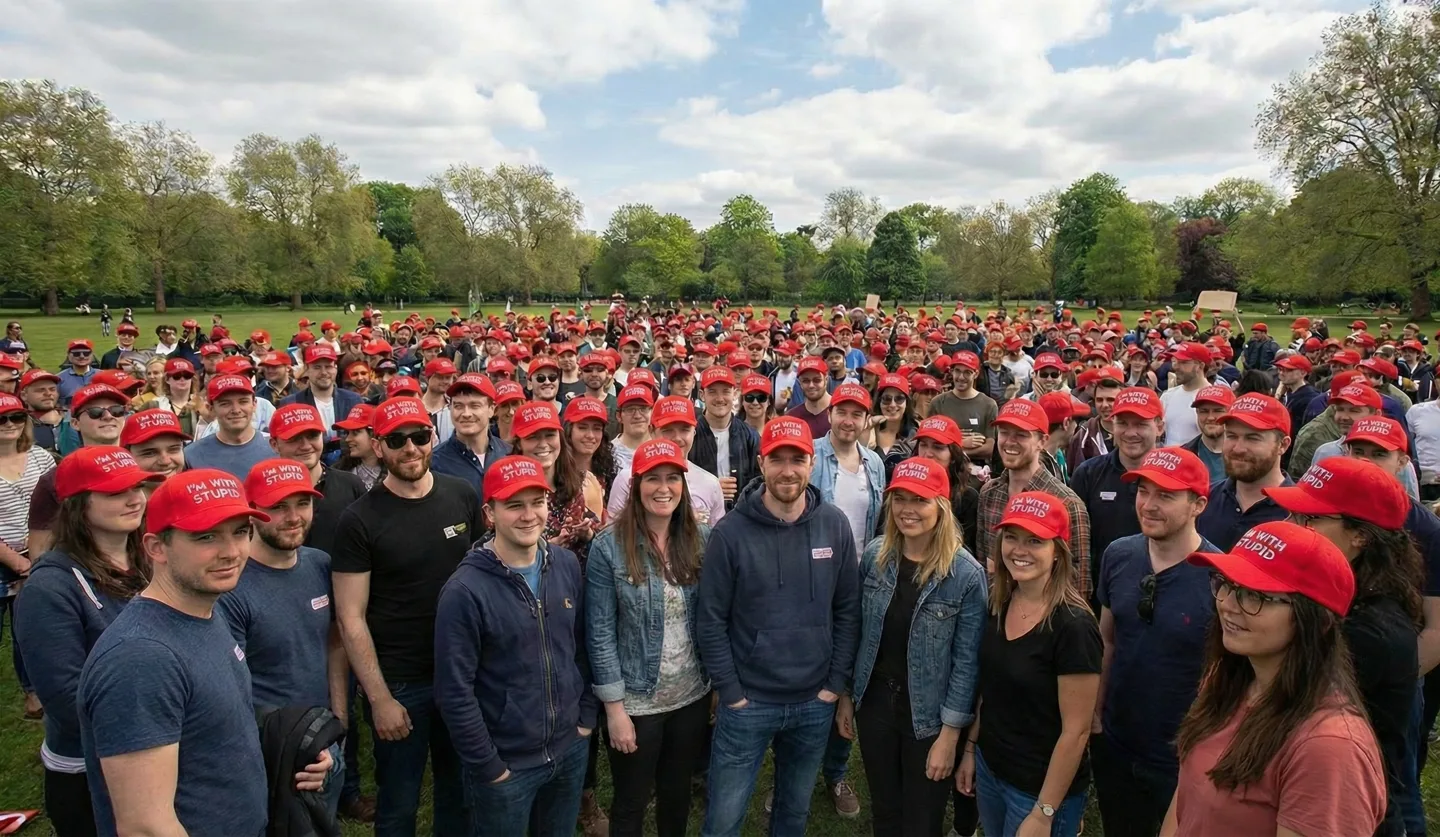
It’s astonishing how easy it is to fool people. After watching Trump’s latest speech—a chaotic blend of mangled syntax, half-lies, and full-blown delusion—I found myself once again staring at a truth that’s too stupid to ignore: stupidity sells. Not just sells—it inspires. You’d think incoherence would be a red flag. You’d assume that lies so easily disproven would break the spell. But no. The applause gets louder. The eyes shine brighter. The faithful lean in, hypnotized by the very thing that should repel them. And it’s not just Trump. He’s not special. He’s just another node in a long, grotesque lineage of idiots who’ve risen to power not despite their lack of intelligence—but because of it.
There’s a certain comfort in the dumb. Simplicity calms the nervous system. Repetition smooths the sharp edges of thought. When a leader sounds like you—or at least, like the unexamined echo chamber inside your head—it creates a rush of safety. You’re not alone. You’re not lost. You’re validated. And if you’ve spent a lifetime being talked down to, condescended to, ignored by institutions or intellects or experts with graphs and words you can’t quite follow—suddenly the dumb guy with the microphone feels like a savior. He mangles the language just like you do. He contradicts himself the way you do when you’re pissed off and confused. He speaks your emotional truth, even if it has no contact with actual truth at all. And that’s the trick: it doesn’t matter what’s real. It matters what feels real. The dolt doesn’t lead. He reflects.
This is not a uniquely American problem. It’s a species problem. A human vulnerability that runs back through every age and culture. We’ve always had a soft spot for the fool with confidence. From emperors who fiddled while cities burned to televangelists who built empires on snake oil and tears, we choose charisma over competence with astonishing regularity. Give us a man with answers—any answers—and we’ll follow him off a cliff as long as he keeps looking back and telling us it’s the right direction. History is littered with the wreckage of these decisions. Idiots make war, rewrite laws in crayon, destroy economies, kill science, erase progress. And yet, when the next one shows up in a shiny suit with a stupid grin and a scapegoat to blame, we line up again like it’s a new show, forgetting we’ve seen this episode a hundred times.
What’s terrifying is not just that people fall for it—but that they need it. Weak leaders don’t just appear; they’re summoned. They rise when the crowd wants to be soothed, not challenged. When they crave permission, not truth. When they’d rather be flattered than made aware. Stupidity, when performed with enough confidence, becomes a kind of opiate. It dulls the pain of complexity. It erases the burden of thought. It offers the sweetest lie: that the world is simple, that you are right, and that anyone who disagrees is an enemy of the people. These are the gifts of the dolt. Not wisdom. Not vision. But emotional anesthesia. And for many, that’s enough.
But here’s the cost—because there is always a cost. Idiots do not hold the future. They cannot build it. They cannot navigate nuance or reckon with contradiction. They don’t adapt. They don’t learn. They react, deflect, collapse, and repeat. And when it all falls apart—as it always does—it’s never their fault. It’s yours. It’s the immigrants, the scientists, the teachers, the thinkers, the artists. It’s anyone who dares to see more. They burn books to warm the crowd. They dismantle the very tools we need to solve real problems. They don’t just fail—they sabotage the conditions required for anyone else to succeed. The dolt doesn’t lead a nation forward. He digs a hole, climbs in, and invites the people to applaud the darkness.
It would be funny if it weren’t so devastating. And maybe it is funny—in that cruel, absurdist way where laughter is the only thing standing between you and despair. Because this is where we are. Again. Watching a man with the vocabulary of a gnat and the ethics of a cartoon villain hypnotize millions of people by saying the same thing five times in a row while gesturing like he’s trying to grab invisible cheeseburgers. And they cheer. They scream. They vote. You can’t satire that. You can only survive it. Or, if you’re lucky, outlive it.
This isn’t about Trump. He’s just the latest dumb puppet in the historical parade of dumb puppets. The real issue is that we keep falling for them. Not because we’re too smart—but because we’re too scared. Intelligence requires discomfort. Growth demands uncertainty. Leadership is not about echoing the crowd—it’s about guiding it through fog. But we don’t want that. Not as a species. Not when the lights flicker and the economy stutters and the future feels like an avalanche of unread notifications. In those moments, we don’t look for visionaries. We look for dolts with slogans. We crave the comfort of the idiot.
And until we stop doing that, until we collectively mature beyond our addiction to loud, confident nothingness, we will keep electing the worst among us to lead the rest of us into ruin. The lights will dim. The sentences will break. The lies will multiply. And the crowd will clap.