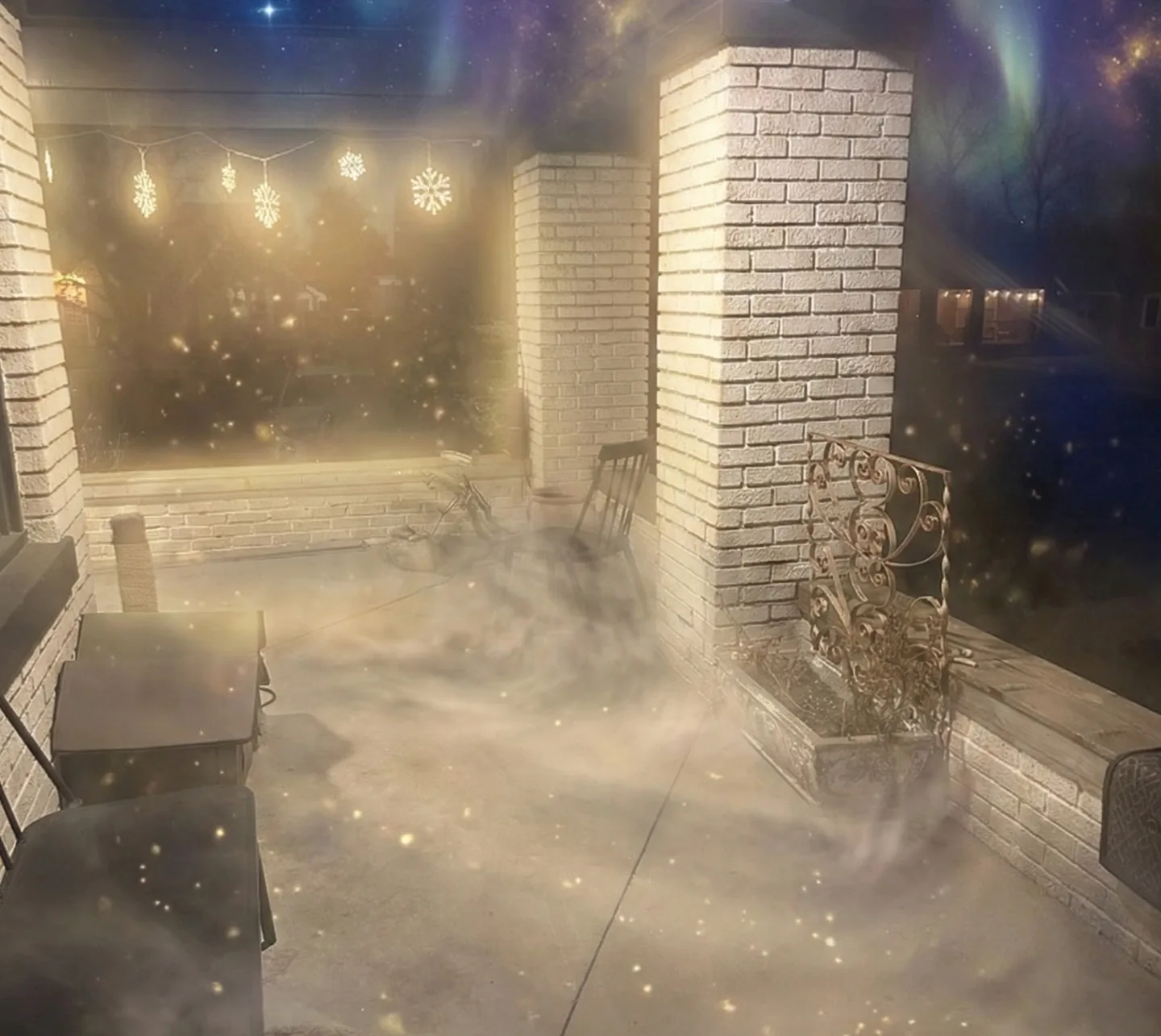
I walked out onto the porch late afternoon, that hour when the light starts forgiving things. The boards were warm underfoot, the air undecided—lingering, like it might stay if asked kindly. Someone was already there, sitting on the step with his elbows on his knees, shoelaces untied, staring out at the yard as if it might say something back. He wore a shirt that didn’t quite fit, all angles and uncertainty, holding himself in that particular stillness that isn’t calm so much as bracing.
It took a second to register. Then it didn’t.
He was thirteen.
He was me.
Of course he was.
My first instinct arrived fully formed and utterly predictable. Bitcoin prices. Dates. Buy here. Hold there. Avoid this job. Don’t trust that person. I felt the advice stack up immediately, neat and efficient, lining up behind my teeth like index cards—optimization masquerading as care.
I stood there longer than usual, letting the urge have its moment without obeying it. Then I sat down beside him instead.
He looked up, startled but not afraid. Curious. Like some part of him already knew that strange things were allowed to happen here. I opened my arms before I opened my mouth.
He hesitated—because of course he did—then leaned in. All sharp bones and held breath. I could feel how tense he was, how long he’d been carrying it without knowing he was allowed to set it down. We stayed like that longer than was comfortable for him. Exactly long enough.
When I pulled back, he asked the question I expected.
“So… do we make it?”
I almost laughed. Almost cried. Instead, I said, “Yes. But not how you think.”
He frowned, then asked the next obvious thing. “Are we… rich?”
There it was.
I glanced out at the yard—at the trees, the quiet, the life humming just loudly enough to hear if you weren’t sprinting past it. “I have everything,” I said. “But none of it came from knowing the right numbers early.”
That confused him. Good.
He asked if I could at least tell him what to avoid. The big mistakes. The things that hurt. I shook my head. “I can tell you what hurts,” I said. “I just can’t tell you not to touch it.”
That didn’t sit well. “You mean we mess up a lot?”
“Constantly,” I said, smiling.
He kicked at the step, thinking. “Then what’s the point of meeting me?”
That one landed harder than the rest. I thought about all the times I’d answered that question before—hypothetically, confidently. All the versions of myself I’d tried to edit into existence. Then I said the thing I’d never said out loud.
“The point is that you don’t need fixing.”
He looked at me sideways, suspicious. “That’s not very helpful.”
“I know,” I said. “It’s just true.”
We sat quietly for a while as the day loosened its grip and the cicadas started warming up. I told him about flow—not as something you chase, but something that happens when you stop arguing with where you are. I told him that most of what he’ll call failure is just feedback arriving without instructions, and that life isn’t a straight line so much as an ongoing conversation that keeps asking, Are you listening yet?
He asked about love. That surprised me. It shouldn’t have.
I told him love isn’t something you earn by becoming impressive. It’s something that shows up when you’re present enough to notice it. That patience isn’t passive—it’s an active trust in timing you don’t control. That every heartbreak we survive becomes the exact muscle we’ll need later.
He asked whether the theories matter—the mirrors, the forcing, all the strange ideas he doesn’t have language for yet. I told him they do, but not because they’re right. They matter because they teach you to stay curious instead of certain, to recognize yourself in what resists you, and to keep expanding instead of collapsing when things don’t go your way.
I didn’t tell him about the wife. Or the daughter. Not directly. I just said, “There’s a version of you who wakes up every day grateful he didn’t skip the hard parts.”
That quieted him.
Eventually he stood, brushed off his shorts, and asked the last question—the one I used to think mattered most. “Is there anything I should do differently?”
I looked at him—really looked—and felt the answer arrive without effort. “No,” I said. “But you can be a little kinder to yourself while you’re doing it.”
He nodded like he’d store that somewhere unreachable for a while.
Before he left, I hugged him again. This time he didn’t hesitate.
When I looked back, the step was empty. The porch unchanged. The light still forgiving. Inside, the life that only exists because I didn’t optimize the past too early was waiting.
For the first time, I didn’t feel the urge to go back and fix anything.
I finally trusted that it had all done its job.